
BI-TORQ Valve Automation – Leading The Thermal Shutt-Off Valve Market
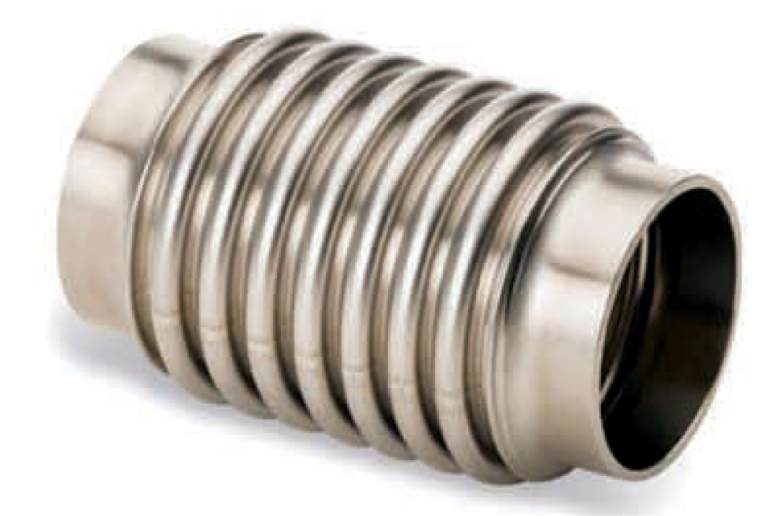
Valve World Magazine A large volume and wide variety of hazardous and toxic materials are currently in use; coupled with increasingly stringent regulatory requirements this makes positive containment and control measures mandatory. Typical applications for so-called zero-leakage valves include thermic fluid, ammonia, chlorine, phosgene, butadiene, benzene, ethylene, hydrochloric acid, hydrogen, steam, fatty acid and Cat. M Fluids as per ASME B31.3, to name just a fraction of the many possible uses. Bellow seal technology is much spoken of as an ‘Absolute Zero” barrier to atmospheric leakage; a design that eliminates product losses, hazards to humans, the environment, and costly downtime required for packing maintenance. By Rajesh K. Salins, Bell O Seal Valves Pvt Limited In a bellow seal valve the bellow is the main component. Metal bellows are thin-walled cylindrical components. Their surface area features a corrugated structure which is perpendicular to the cylinder axis. Because of this corrugated structure, the bellows are highly flexible during axial, lateral and angular deformation. At the same time, they are pressure-resistant, tight, temperature and corrosion-resistant as well as torsion resistant. The metallic bellow acts as a barrier between stem and secondary seal (i.e. a gland packing). Various manufacturing techniques are available, as follows: Seamless The seamless hydraulically formed bellow (see Figure 1) is manufactured from a thin tube. The seamless tube is manufactured using extrusion, piercing or gun drilling. The tube or cylinder is expanded outward to form the convolutions by hydraulic shaping. The bellow uniformity is achieved and the hydraulic pressure used to form the bellow inherently tests the bellows material for defects during manufacturing. There is a limit on the length of the bellow that can be manufactured by hydraulic forming. This means that in gate valves (with their large lift requirements), two or three bellows welded in series will be needed to support the total valve stroke. Welded roll Welded roll formed bellows (see Figure 2) are widely used. In this process, thin sheet material is rolled into a tube and seam welded using a micro plasma welding machine. The bellow uniformity is achieved and the hydraulic pressure used to form the bellow inherently tests the bellows material for defects during manufacturing. Welded bellow A welded below (see Figure 3) is made from a multiple stack of diaphragms circumferentially welded together at the inside and outside edge of each convolution (see Figure 4). A minimum of nine welds would be required to make a single-ply bellows with five convolutions Such a bellows can normally sustain greater compression and extension (stroke) than other bellows designs leading to a more compact bellow seal valve. It is more expensive and its performance is heavily dependent on the reliability of the welding process used in the manufacturing of the individual convolutions of the bellows. Cycle life The bellow seal design length must be such that the total number of convolutions will support the full stroke of the valve. Each convolution of a bellow, shares equal load in the total length of a bellow. The cycle life of a bellow is influenced by the length of its stroke. The stroke should be an in-line mode. Lateral or angular movement in a bellow design reduces cycle life of the valve (see Figure 5). A bellow can be made to fail merely by stroking. Over-stroking of a bellow beyond its limit reduces life tremendously. Conversely, the cycle life of a bellow can be greatly improved by reducing its stroke.In bellow seal gate and globe valve designs, it is important to keep the bellow spring rate as low as possible The lower the spring rate, the lower the hand wheel torque required just to flex the bellow and the longer the life of the valve. Over compressing a bellows can lead to convolution damage and low cycle life. Most bellow support load better in compression than in expansion. In addition to stroke, cyclic pressure on the bellow is another factor that affects cycle life of a bellow.In a bellow seal gate or globe valve, the stress change in the bellow is a function of the valve stroke and the differential pressure experienced by the bellow during its stroke. If the valve is not stroked, then the only stress change in the bellow is due to the differential pressure experienced by the bellow during its life. The bellow cyclic life could be infinite if the bellow endurance strength is not exceeded during pressure fluctuation. If the bellow is stroked while the pressure on the bellows remains constant, the cycle life is expected to be better than if the pressure fluctuates widely. This is a major consideration when comparing advertised cycle lives of bellows valves from various manufacturers. The comparison of test data on cycle life for bellow valves should be made on the basis that all bellows are pressurized to a common pressure stroked to the full stroke requirements of the valve in which they are to be used. The cycle life of a bellows valve is determined by flexing it to its full design stroke while exposing it to its full design pressure. A constant pressure during cycle testing is less severe than a highly fluctuating pressure. Pressure retention The pressure retention capability of a bellow is determined by thin wall tubing, and this capability must be carefully balanced with its flexibility and spring rate. Doubling the wall thickness of a bellows will increase its pressure retention capability but will reduce its stroke significantly and increase its spring rate. The higher spring rate would lead to higher hand wheel torques just to mechanically stroke the valve bellow Valve and bellow designers balance pressure, flexibility and spring rate of the bellow by using a multiply design. The pressure that a bellow can withstand can be doubled or tripled by using two or three piles of martal wall (see Figunes 6 and 7) one wall thickness will withstand a certain pressure and compression/exparmion, a multiply bellow of the same wall thickness will withstand two or three times the pressure